
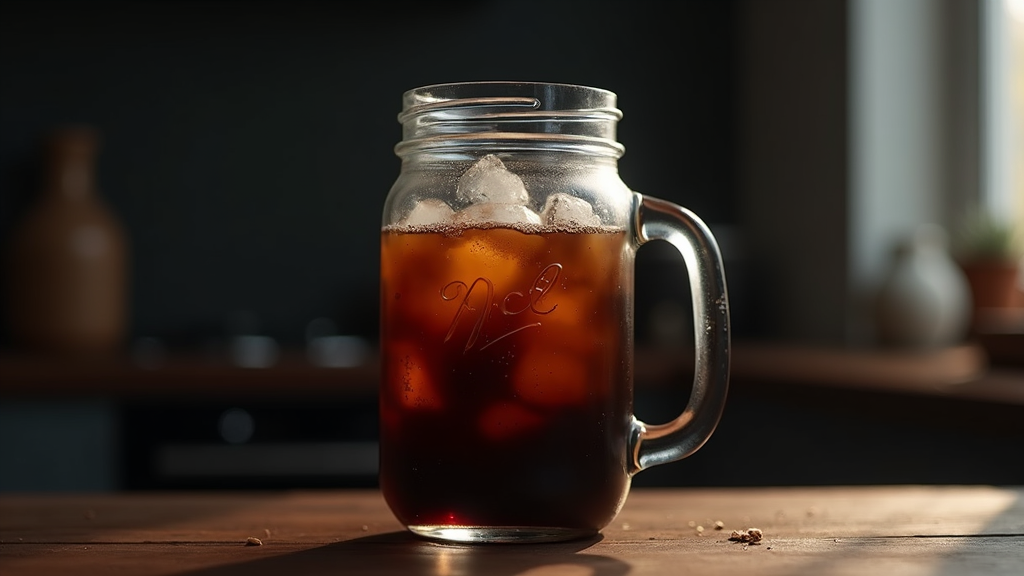
You know what costs too much? Store-bought cold brew concentrate. You know what takes five minutes of actual effort and lasts all week? Making it yourself. Here’s everything you need to know — no fluff, no lifestyle photography, just coffee.
What Is Cold Brew Concentrate?
Cold brew concentrate is cold brew made at a higher coffee-to-water ratio than ready-to-drink cold brew. Where standard cold brew runs around 1:8 (1 part coffee to 8 parts water), concentrate runs 1:4 or even 1:3. The result is a thick, bold, slightly syrupy coffee extract that you dilute before drinking.
Why make concentrate instead of regular cold brew? Efficiency. A batch of concentrate takes up less fridge space, lasts just as long, and gives you more flexibility — iced coffee, hot coffee, cocktails, milk drinks. One batch, multiple uses.
The Ratio Guide
Cold brew ratios are simple once you understand what you’re building. Here’s a reference:
| Ratio (Coffee:Water) | Type | How to Drink It |
|---|---|---|
| 1:3 – 1:4 | Strong concentrate | Dilute 1:1 to 1:3 before drinking |
| 1:5 – 1:6 | Moderate concentrate | Dilute 1:1 or drink lightly over ice |
| 1:7 – 1:8 | Ready-to-drink | Pour directly over ice |
For this guide, we’re targeting 1:4 concentrate — bold enough to dilute well, flexible enough for most uses. For every 1 cup of coarse-ground coffee, you’ll use 4 cups of cold water.
What You Need
- Cold brew maker or mason jar — A dedicated brewer like the OXO Good Grips Cold Brew Coffee Maker or the classic Toddy Cold Brew System makes life easier. Both filter cleanly and were built for this.
- Wide-mouth mason jars — For brewing in and storing the finished concentrate. Ball wide-mouth quart jars are the standard. Get a few.
- Fine mesh strainer or cheesecloth — If you’re not using a dedicated brewer, you’ll need to filter. A fine mesh strainer handles most of it. For the cleanest result, layer it with a piece of cheesecloth.
- Coarse-ground coffee — Medium-dark roast works well. Go coarser than you’d use for a French press. If you’re grinding at home, aim for sea salt texture.
- Cold or room-temperature water — Filtered if your tap water is hard or chlorinated. It matters more with concentrate because you’re magnifying every flavor.
Step-by-Step: How to Make Cold Brew Concentrate
This process takes about 10 minutes of hands-on time. The coffee does the rest.
Step 1: Measure and Grind
For a standard 1-quart batch: use 1 cup (about 85g) of coarse-ground coffee and 4 cups (32 oz) of cold water. Scale up or down as needed — the ratio is what matters, not the total volume.
Grind fresh if you can. Pre-ground works but you lose some clarity. Coarse grind prevents over-extraction and makes filtering easier.
Step 2: Combine Coffee and Water
Add your coffee grounds to your mason jar or cold brew maker. Pour the cold water over the grounds slowly to make sure everything is saturated. Give it a gentle stir to eliminate any dry pockets.
Don’t compact the grounds. Don’t agitate too hard. You want saturation, not agitation.
Step 3: Steep
Seal or cover your container and leave it alone.
- Room temperature: 12–16 hours
- Refrigerator: 18–24 hours
Room temp brews faster and pulls a slightly different flavor profile — often brighter, a little more acidic. Fridge brews slower, smoother. Both work. Don’t go past 24 hours or you’ll start extracting bitterness you don’t want.
Step 4: Filter
This is where most people lose patience. Don’t rush it.
If using a dedicated cold brew maker (OXO, Toddy): follow the brewer’s drain/press instructions. They’re designed for this step.
If using a mason jar:
- Place your fine mesh strainer over a clean jar or pitcher
- Line it with cheesecloth if you want a cleaner pour
- Pour slowly — don’t dump and don’t press the grounds
- Let gravity do the work; squeezing extracts bitter compounds
You may need to let it drip for 5–10 minutes. The final product should be dark, clear-ish, and thick.
Step 5: Transfer and Store
Pour your filtered concentrate into a clean mason jar. Seal it tight. Label it with the brew date.
Storage
Cold brew concentrate keeps well — here’s what you need to know:
- In the fridge: 7–14 days. Some people push to 2 weeks with no issues. If it smells flat or sour, toss it.
- Frozen: Up to 6 months. Pour into ice cube trays, freeze, then transfer to a bag. Thaw as needed — or drop concentrate cubes directly into hot water for a cold-brew-to-hot-coffee hack.
- Don’t leave it at room temp: Once brewed, refrigerate it. You’ve made a perishable product.
Wide-mouth mason jars are your best storage vessel — easy to pour from, easy to clean, and they seal tight. Keep a dedicated jar just for concentrate.
How to Use Cold Brew Concentrate
Iced Coffee
The most common use. Dilute 1:1 with cold water or milk over ice. For something richer, use oat milk or whole milk instead of water. Adjust the ratio until it hits where you want it — more concentrate for stronger, more liquid for smoother.
Hot Coffee
Dilute 1:3 or 1:4 with hot water. You get a cup with cold brew’s low-acid profile but hot — good for people who want the smooth taste of cold brew without the temperature. Doesn’t taste exactly like drip, but it’s a solid cup.
Coffee Cocktails
Concentrate is ideal for cocktails — it’s bold enough to hold its own against alcohol. Works well in espresso martinis (sub it for espresso), coffee old fashioneds, and anything where you want coffee flavor without watering down the drink. Use it straight (undiluted) when mixing with spirits.
Coffee Smoothies and Protein Shakes
A tablespoon or two of concentrate goes straight into a blender with your other ingredients. You don’t need to pre-dilute when the other liquids in the recipe provide enough volume.
Gear Recommendations
You don’t need much. But these are worth having:
- OXO Good Grips Cold Brew Coffee Maker — Rainmaker lid for even saturation, pull-tab drain valve, built-in filter. No messy filtering step. Makes 32 oz. of concentrate per batch.
- Toddy Cold Brew System — The original. Uses a reusable felt filter for an exceptionally clean, smooth concentrate. Makes larger batches. Industry standard.
- Ball Wide-Mouth Quart Mason Jars — For brewing (if going the DIY route) and storing. Get a 4-pack minimum.
- Fine Mesh Strainer + Cheesecloth — If you’re going mason jar DIY and want a clean result. The combo works better than either alone.
FAQ
Can I use regular (non-coarse) ground coffee?
Yes, but filtering gets harder and the result can taste bitter or muddy. If you only have pre-ground, use a paper filter during the strain step and expect a longer drip time. Coarse grind is the right tool for this job.
How much caffeine is in cold brew concentrate?
More than you think. A 1:4 concentrate can run 200–300mg of caffeine per 2 oz serving (before dilution). After a 1:1 dilution over ice, you’re looking at 100–150mg per 8 oz glass — roughly equivalent to a strong cup of drip coffee. Don’t drink it undiluted like a shot of espresso unless you want to redline your nervous system.
Why does my cold brew taste bitter?
Three likely causes: (1) grind too fine — fine grounds over-extract and taste harsh; (2) steeped too long — past 24 hours you start pulling bitter compounds; (3) squeezed the grounds during filtering — that pushes bitter sediment into your concentrate. Fix one of these and your next batch will be better.
Can I reuse the grounds for a second batch?
Technically, but you’ll get a significantly weaker result. First-use grounds have given up most of their soluble compounds. A second run at the same steep time gives you thin, flat coffee. Not worth it. Compost the grounds and start fresh.
Cold brew concentrate is one of the few coffee upgrades that actually saves you money in the long run. One batch, two minutes of active time, a week’s worth of coffee. That’s the whole pitch.
Leave a Reply