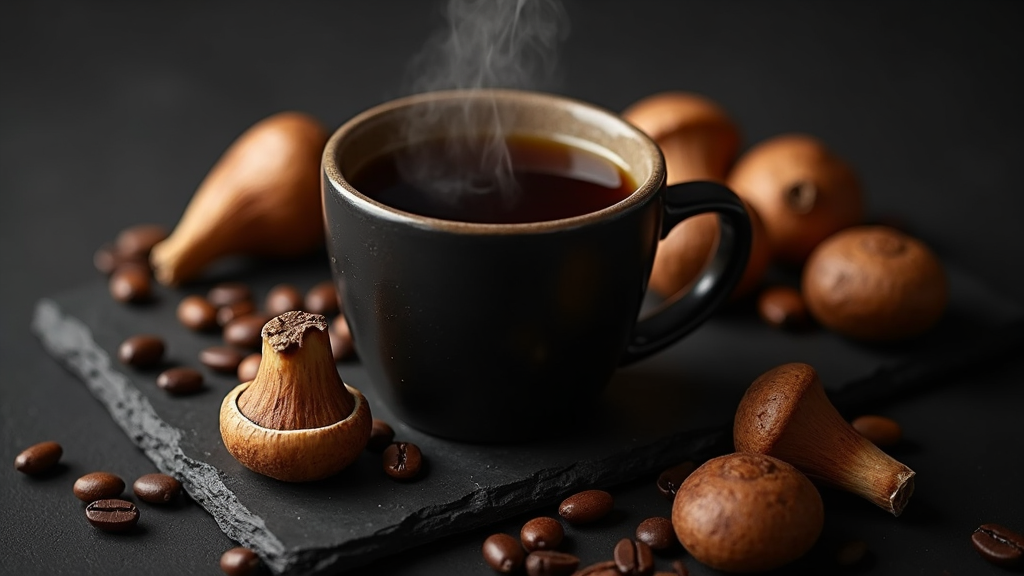
Someone at your office is drinking mushroom coffee. Maybe it was your gym buddy. Maybe it showed up in your Instagram feed between ads for weighted blankets and “biohacking” supplements. Either way, mushroom coffee is having a moment — and if you’re a real coffee drinker, your first instinct was probably to roll your eyes.
Fair. I get it. But I’ve been down this rabbit hole so you don’t have to guess. Here’s the honest take on what mushroom coffee actually is, what it does (and doesn’t do), how it tastes, and whether it’s worth swapping out your regular bag.
What Is Mushroom Coffee, Exactly?
Mushroom coffee isn’t a cup of dirt water brewed from portobello scraps. It’s regular coffee — usually a medium roast — blended with powdered medicinal mushroom extracts. We’re not talking shiitake or button mushrooms. The main players here are functional mushrooms like lion’s mane, chaga, reishi, cordyceps, and turkey tail.
These mushrooms have been used in traditional Chinese and Ayurvedic medicine for centuries. The idea is to layer their supposed benefits on top of your morning caffeine hit. The result is a blended powder — sometimes instant, sometimes ground — that you brew like normal coffee.
Most mushroom coffee blends run at roughly half the caffeine of standard coffee. So if you’re sensitive to caffeine or trying to cut back without going cold turkey, that’s actually a meaningful feature.
The Claimed Benefits (And What the Science Actually Says)
This is where brands like Four Sigmatic and Ryze go into full marketing mode. Let’s break down the claims honestly.
Lion’s Mane → Focus and Cognitive Function
This is the big one. Lion’s mane contains compounds called hericenones and erinacines that appear to stimulate nerve growth factor (NGF) in lab and animal studies. There are a small number of human trials — including one from 2009 published in Phytotherapy Research — showing cognitive improvements in older adults with mild cognitive impairment.
Reality check: The human research is promising but thin. Most studies use much higher doses of lion’s mane extract than what’s in a typical mushroom coffee blend. You’re probably not getting a meaningful therapeutic dose from a daily cup. But it’s not snake oil either — the mechanism is real, the research just isn’t mature yet.
Chaga → Antioxidants and Immune Support
Chaga has one of the highest ORAC scores (antioxidant capacity) of any food measured. It also contains beta-glucans, which are well-documented immune modulators. The research on chaga in humans is limited, but the antioxidant case is solid — it’s genuinely loaded with the stuff.
Reality check: Antioxidants from dietary sources have a murky track record in actual health outcomes. Coffee itself is already one of the biggest sources of antioxidants in the average American’s diet. Adding chaga on top probably isn’t hurting, but the incremental benefit is hard to quantify.
Reishi → Stress and Sleep
Reishi is often called the “mushroom of immortality” in traditional medicine. Modern research shows some evidence for immune modulation and stress reduction. A few studies suggest it may help with fatigue and mood in people dealing with chronic stress.
Reality check: Reishi is better suited to an evening supplement than a morning coffee ingredient. Pairing it with caffeine is a bit counterintuitive. It’s not harmful, but the timing logic is a little off.
Cordyceps → Energy and Athletic Performance
Cordyceps has some legitimate research behind it for improving VO2 max and reducing fatigue in athletes — particularly older adults. It appears to support ATP production, which is how your cells make energy.
Reality check: The effects are real but modest. Most mushroom coffee blends include it, but again — dose matters, and the amount in a coffee blend likely isn’t hitting the levels used in research studies.
How Does Mushroom Coffee Actually Taste?
Honestly? Better than it sounds.
Most people expect something earthy, funky, or weird. What you actually get is a slightly smoother, less acidic cup than standard coffee. The mushroom flavor is subtle — more of a background earthiness than anything that screams “I’m drinking fungus.” If you’ve ever had a mellow medium roast, it’s in that neighborhood.
The lower caffeine content changes the experience too. There’s no spike and crash. You get a more even energy curve, which some people love and others find underwhelming. If you need that hit-you-like-a-truck morning jolt, mushroom coffee isn’t your friend.
One caveat: quality varies wildly by brand. The cheap stuff tastes thin and kind of sad. The better brands — Four Sigmatic and Ryze in particular — actually nail the flavor. MudWtr is its own thing entirely (it leans into spices heavily and tastes more like a chai latte than coffee). Know what you’re buying before you commit.
Best Mushroom Coffee Options on Amazon
If you want to try mushroom coffee without committing to a subscription or specialty site, Amazon has solid options. Here are the three I’d point you toward:
Four Sigmatic Mushroom Coffee
Four Sigmatic is the brand that put mushroom coffee on the map. Their lion’s mane + chaga blend is the most approachable entry point — it tastes closest to regular coffee and uses dual-extracted mushroom powder (which matters for bioavailability). Available in ground, whole bean, and instant packs.
→ Check Four Sigmatic on Amazon
Ryze Mushroom Coffee
Ryze has blown up in the past couple years and for decent reason. It’s an instant blend with 6 mushrooms (lion’s mane, cordyceps, reishi, shiitake, turkey tail, king trumpet) plus MCT oil. It’s creamy, low-acid, and easy to make. The flavor is noticeably different from brewed coffee — more like a latte — so manage expectations if you’re a black coffee purist.
MudWtr
MudWtr is the odd one out — it’s technically not coffee at all. It’s a blend of cacao, masala chai spices, lion’s mane, chaga, reishi, and cordyceps with just a fraction of the caffeine. If you’re trying to dramatically reduce caffeine while keeping a warm morning ritual, it works. If you actually like the taste of coffee, this won’t scratch that itch.
The Verdict: Is Mushroom Coffee Worth It?
Here’s where I land after actually trying this stuff and digging into the research:
Yes — for the right person. If you’re sensitive to caffeine, deal with coffee jitters or afternoon crashes, or are just curious about functional mushrooms without committing to a supplement stack, mushroom coffee is a reasonable swap. The benefits are real, even if they’re overhyped in marketing. The taste is solid enough that it doesn’t feel like a sacrifice.
No — if you just want great coffee. If you’re chasing cup quality, origin character, or just a damn good espresso, mushroom coffee isn’t playing in that game. You’ll spend more money for a blander, less interesting cup. Stick to a good single-origin and call it a day.
Maybe — if you’re a coffee drinker who wants to experiment. Try a bag of Four Sigmatic, drink it for two weeks, and pay attention to how you feel. That’s more useful than any study I can cite. The placebo effect is real too — if you believe it’s making you more focused, that might actually make you more focused. Brains are weird like that.
Mushroom coffee isn’t a miracle. It’s a decent, functional product that fills a specific niche. The hype is overblown. The hate is also overblown. It’s just coffee with extra stuff in it — and for some people, that extra stuff makes a real difference.
Try it once. Form your own opinion.
All product links on this page are Amazon affiliate links. If you buy through them, we earn a small commission at no extra cost to you. We only recommend products worth your money.
Leave a Reply